Historically, farmland in some countries has a well-earned reputation as a stable investment and a potential hedge against inflation. Increasingly, it is also understood as a critical asset class. Growing demand from investors for consistent long-term returns and climate-resilient assets, as well as concerns around sustainability and food security, have led to sustained increases in farmland values in recent years.
The most recent edition of the Savills Global Farmland Index, published in September 2025, shows that global farmland values increased by an average of 18% (in US dollar terms) in 2024. Values have risen steadily since the index launched in 2002, delivering an average compound annual growth rate of 11% (figure 1).
In 2024 growth was led by a rise of 47% in South America. The region’s exceptional performance was influenced by a combination of factors: political changes in Argentina, favourable currency movements across the region and the advantages of South America’s fertile soils and well-established export infrastructure.
“Much of farmland’s appeal has traditionally been based on the fact that values have been far less volatile than assets such as oil or gold – after all, there will always be demand for food, fibre and fuel,” explains Jonny Griffiths, Head of International Farmland, Savills.
“But there are several factors that can be expected to support farmland values and returns over the decades to come. These include global population growth, increasing food consumption per capita, as well as the reductions in supply that are caused by urbanisation and land degradation.”
Global Farmland Index
Source: Savills Research and various other data sources/estimates
Farmland’s role in sustainable investing
Demand from investors and asset managers for investments that align with environmental, social and governance (ESG) goals adds to the attractiveness of farmland as an asset class. Under Article 9 of the EU Sustainable Finance Disclosure Regulation (SFDR), which sets the highest sustainability standards for investment funds, farmland can qualify if it is managed responsibly to support climate and nature-related sustainability goals.
Such investments may incorporate regenerative farming practices aimed at improving soil health, biodiversity and water quality, as well as initiatives that aim to promote social responsibility for the communities that live and work on the land.
Tree crops benefiting from consumption changes
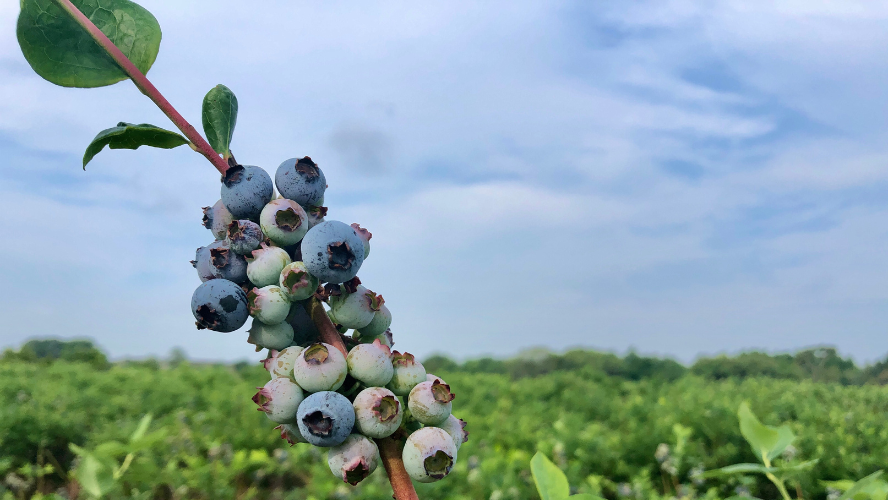
From apples and avocados to nuts and berries, tree crops offer some of the most compelling farmland investment opportunities at present. The global food megatrend towards increased consumption of healthy, protein-rich foods is particularly favourable for producers of foods with high levels of polyunsaturated fats (such as olive oil, almonds and avocados), as well as those with high antioxidant levels (such as blueberries and raspberries).
Data from the Food and Agriculture Organisation of the United Nations indicates that global per capita consumption of blueberries increased by 412% between 2000 and 2021. Avocado consumption rose by 146% and almond consumption by 128% over the same period. Growing affluence in countries including India and China is expected to lead to further growth in global demand.
In addition, tree crops can sustain productivity for potentially dozens of harvests, unlike annual crops that are harvested once during their lifetime. They also typically benefit from higher sale prices per tonne, and greater tonne-per-hectare yields than crops that produce a single harvest each year.
Assessing and mitigating investment risks
But there are potential risks as well as benefits to consider when investing in farmland. Looking at tree crops in particular, irrigation is essential for the viability of many orchards, especially those in warm, dry regions. As such, water shortages can present challenges, although these can be mitigated through improvements in soil structure or by balancing crop types. For example, by growing almonds alongside drought-resistant olives.
Tree crops also take several years to reach maximum yield levels: during this period, changes in the market or demand levels could lead to price falls. However, investors can offset short-term volatility by holding investments over the long term.
In more general terms, it is important to look at both the macro and micro conditions that can affect the long-term viability of any farmland investment. The Savills Global Index of Investible Farmland looks at the key risks and opportunities associated with investing in farmland across different countries. The index assesses high-level factors such as political transparency and freedom, restrictions on foreign investment and international trade, along with each country’s policies on sustainable agriculture and the stability of its currency.
In terms of the risk/return profile of individual investments, it is also crucial to take into account more location-specific issues such as soil fertility, climate and topography, in addition to whether there is adequate infrastructure in place to access the land and transport produce to consumers.
Farmland’s long-term fundamentals
The US government’s imposition of tariffs on multiple nations was one of the most significant developments in global trade in 2025. While tariffs and other geopolitical challenges may pose risks in the short term, most farmland-related business plans have a minimum period of at least five years – and the most knowledgeable investors and farming businesses work to timelines of over 20 years or more. Long-term trends such as rising food consumption per head, a reduction in available land and increasing demand for climate-resilient assets mean farmland is likely to remain attractive to investors in the years ahead.
Read more in our 2025 Spotlight on Global Farmland.