Ten years ago, Savills introduced the Tech Cities Index to measure the urban hubs that attract technology, talent and investment. A key component of our index is liveability – the everyday quality of urban life that cities offer. Central to this is the presence of spaces where people can work, make connections and spark ideas over a hot (or cold) drink.
Remote and hybrid working have heightened the importance of café culture, with professionals increasingly using coffee shops as a blend of home and office. Walk into any trendy coffee shop in Shoreditch or Gangnam on a weekday, and you’ll see laptops open beside matcha lattes and people meeting work contacts. Coffee culture adds to a city’s appeal and has become a vital part of the social infrastructure that supports the tech ecosystem, enabling the kind of spontaneous interactions and creative buzz that video calls can’t replicate.
Why coffee shops matter to tech hubs
Café culture isn’t new, but it is evolving. A defining trend of the past decade has been the rise of third-wave coffee shops. Driven in part by millennials’ interest in artisanal quality, innovation and an enhanced experience, third-wave cafés focus on handcrafted brews, latte art and single-origin coffee beans and often serve as community hubs. But today, a fourth wave of coffee is emerging, defined by Gen Z priorities such as sustainability, health-consciousness and tech-enabled convenience.
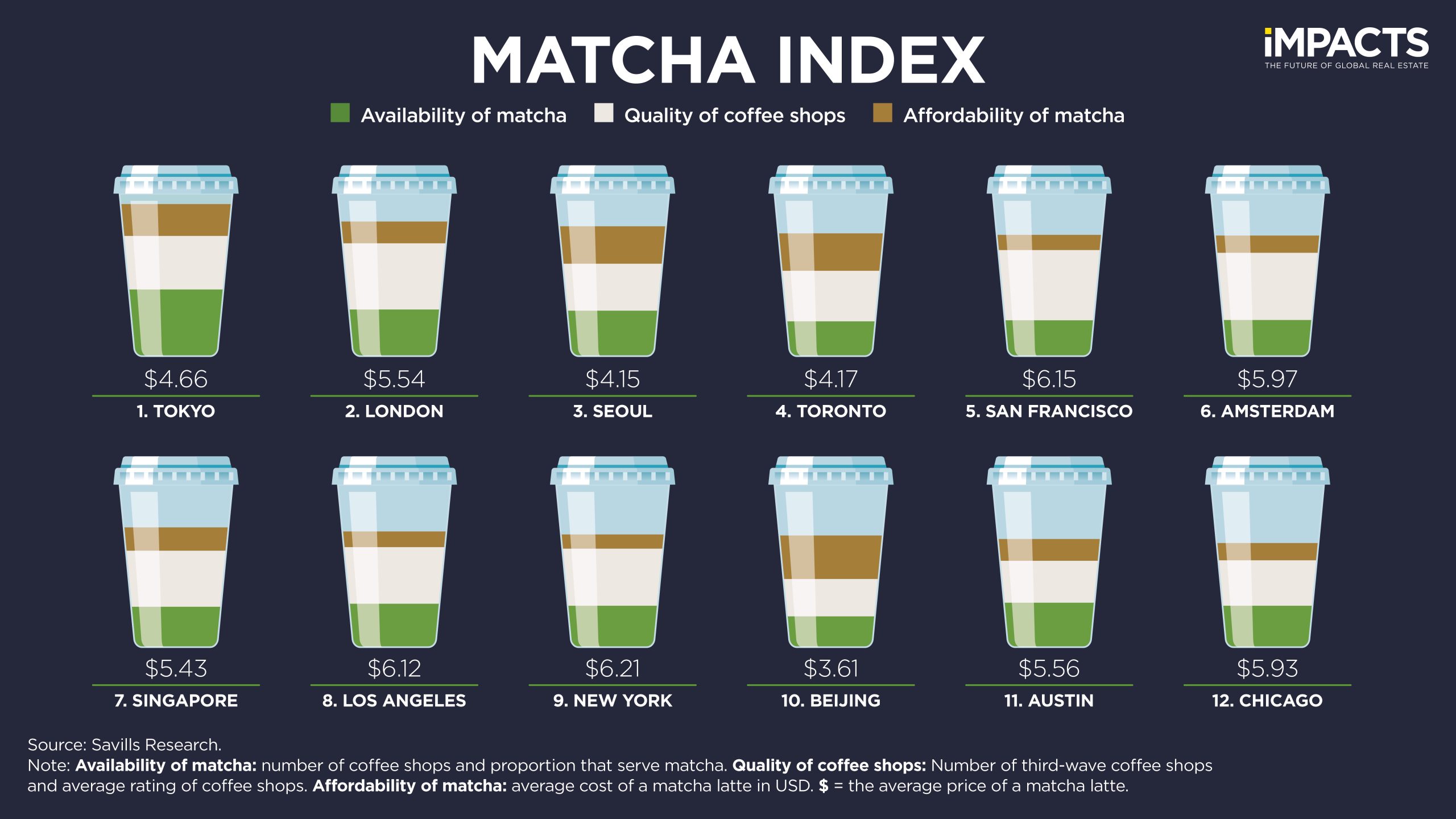
As coffee shops have evolved, so too have coffee orders. In 2015, we created the Flat White Index as an alternative barometer of a city’s status as a tech hub. A decade on, matcha lattes have taken over as the go-to drink for young professionals. This shift reflects broader lifestyle trends: matcha is prized for its slow-release energy and perceived health benefits, appealing to a growing focus on wellness amongst much of the tech industry. Our Matcha Index scores cities on the availability and affordability of matcha drinks and the quality of the coffee or tea shop experience. These metrics reveal which cities best support the blend of work, leisure and lifestyle that defines a thriving tech hub.
Tokyo and London lead the way
It’s perhaps no surprise that Tokyo tops the Matcha Index. With matcha lattes costing an average of $4.66, the city offers value and vibrancy, blending traditional tea culture with a modern tech lifestyle.
London is in second place. It matches Tokyo in café quality and has indie cafés and a deep-rooted coffee culture. But it falls short on matcha affordability, with a matcha latte priced at $5.54.
Seoul is placed third. With matcha costing just $4.15 on average, it stands out for affordability, as well as its vibrant, 24/7 cafés. Meanwhile, San Francisco ranks fifth on the Matcha Index. It leads in café quality, but matcha is harder to find and is among the most expensive globally at $6.15. Despite the cost, the city’s premium cafés reinforce its reputation for quality and a lifestyle-conscious tech culture.
All these cities also feature highly in our overall Tech Cities Index, in which Tokyo ranks 12th and is the highest-scoring Asian location in our city buzz and wellness pillar. London is third, Seoul is 10th and San Francisco is our top-ranking Tech City in our latest index.
Cafés form part of the social fabric
Our Matcha Index reveals a clear pattern: tech cities that successfully blend lifestyle and innovation tend to thrive. While the index may appear playful, it underscores a serious point: vibrant café cultures are integral to urban liveability and connectivity. These spaces foster spontaneous interactions, networking and a seamless blend of work and leisure, making them essential to the social fabric of modern tech hubs.
The move from the Flat White Index to the Matcha Index reflects an evolution in tech culture. As today’s professionals focus increasingly on wellness and sustainability, the emerging fourth wave of coffee culture is responding to these trends – with the growth of matcha one symbol of that shift. As cities continue to adapt to these changing tastes, their capacity to support both community and creativity will help determine their place in the tech landscape of the future.