The developing AI landscape
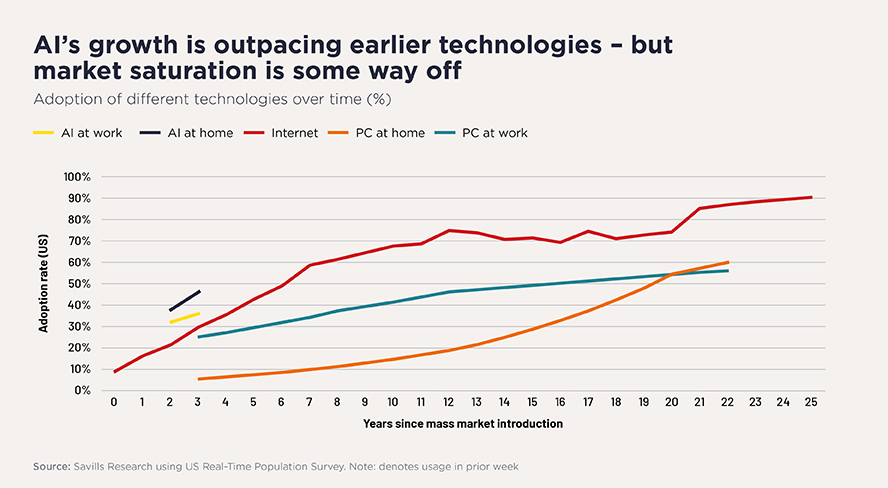
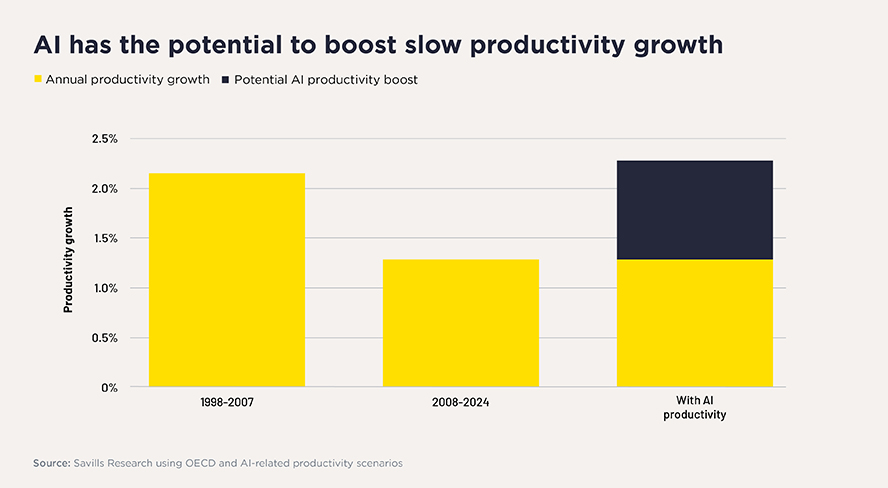
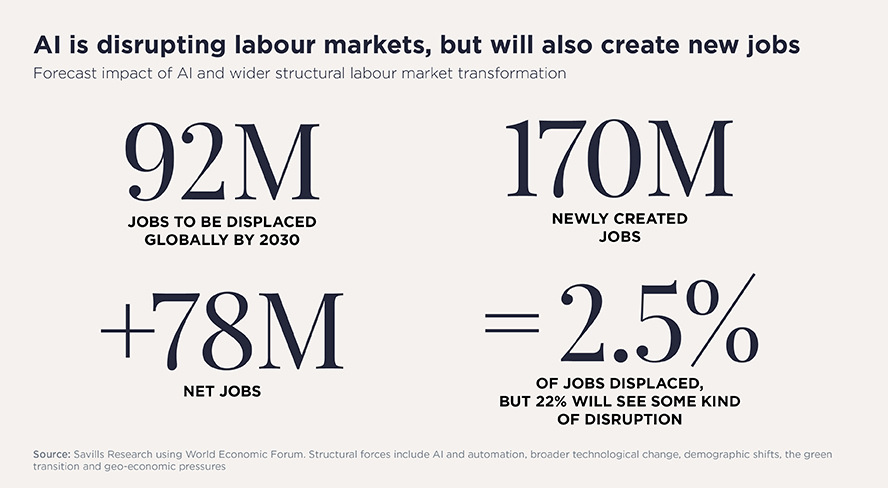
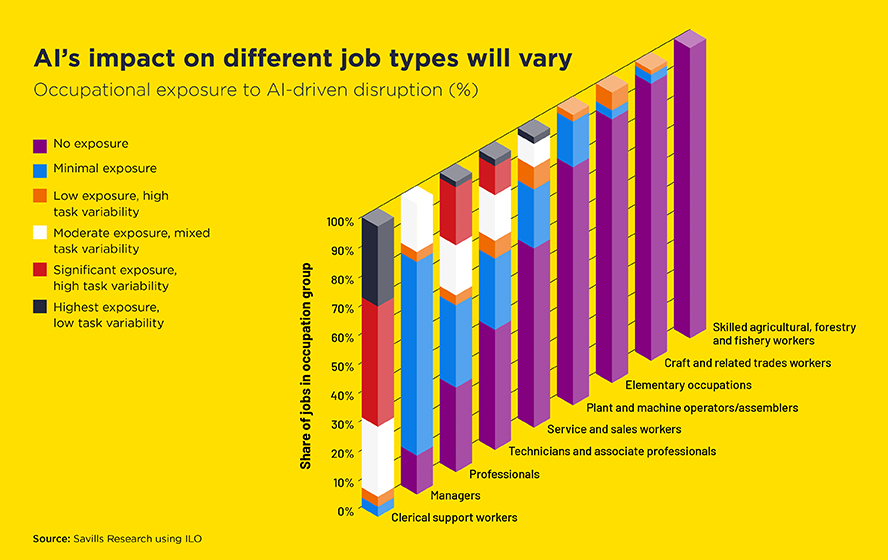
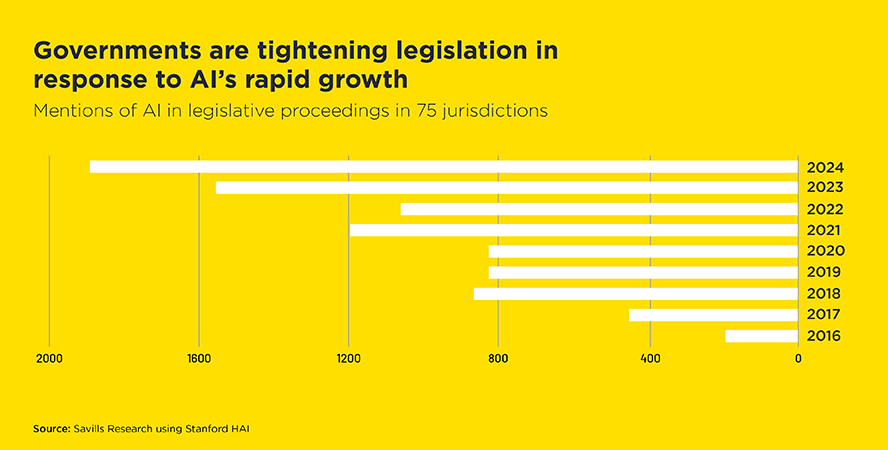
AI adoption has grown rapidly since OpenAI launched ChatGPT, the first mass-market large-language model, in late 2022. While the technology is still in its infancy, its effects on productivity and labour markets are starting to be felt. Regulators around the world are also considering how to respond.
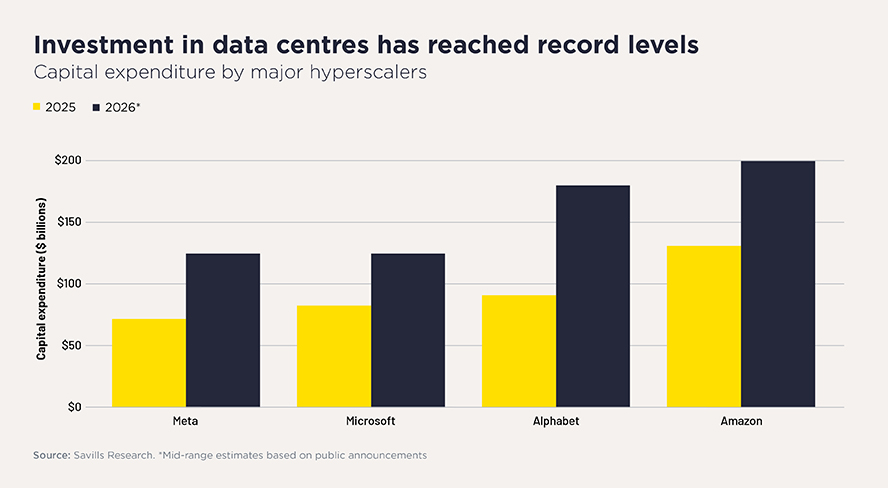
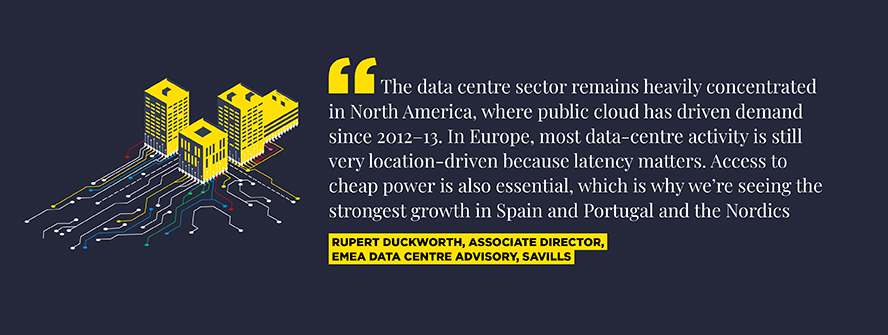
Real estate is already experiencing AI’s impact: data centres are enjoying an investment boom. This is driven in part by record hyperscaler spending, for which the US has been the major recipient. There are also knock‑on effects for logistics, with Europe alone expected to see an additional 8.5 million sq ft of demand for supporting warehousing space over the next three years.
Longer term, the implications for the industry are less certain. But if the current pace of uptake and technological development continues, AI could have a transformative effect.
AI’s impact on real estate
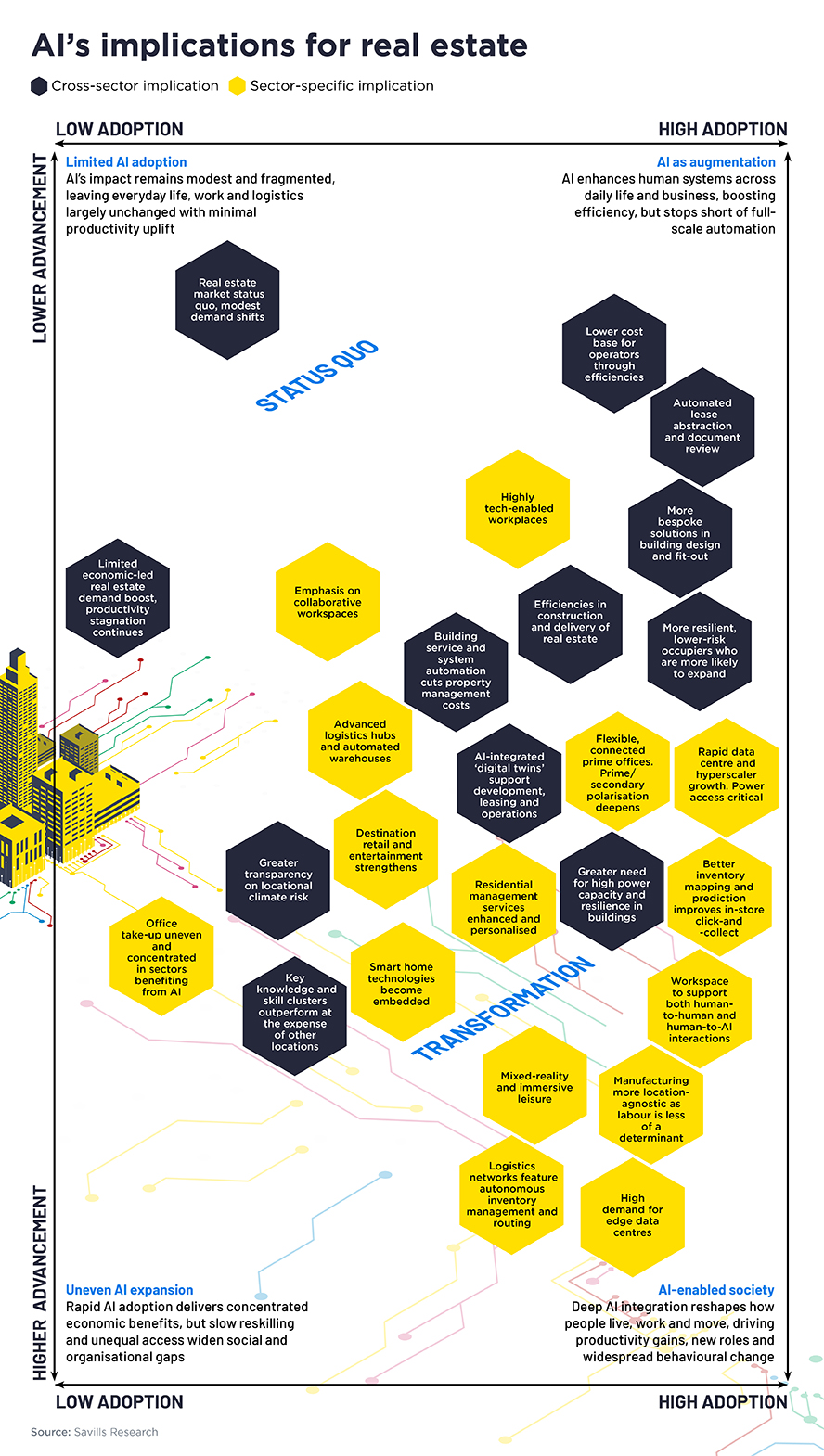
AI’s long-term impact on real estate will depend on two factors: the pace at which the technology is adopted, and the level of sophistication or advancement it reaches. A high-adoption, high-advancement scenario will fundamentally change what people need from homes, workplaces, leisure facilities and logistics networks.
Alternatively, uneven AI deployment could concentrate economic gains in a limited number of firms or regions. Or adoption may fall short of full‑scale automation, resulting in more incremental changes.
The impact is already being felt in different sectors. AI has fuelled rapid investment in data centres. Wider everyday adoption will further boost demand for edge data centres to handle time-sensitive workloads.
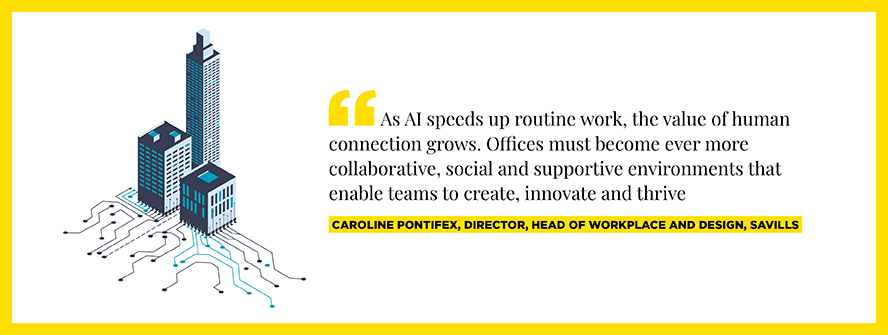
As AI is integrated into operational systems, tech-enabled workspaces, warehouses, retail and homes could become the norm, pushing businesses towards higher-quality space. AI-driven efficiency gains could lead to more resilient, lower-risk tenants who are more likely to expand, boosting real estate demand.
In a more fragmented deployment scenario, AI’s economic benefits could accrue disproportionately to certain firms, sectors or regions. Differences in office employment have, so far, been explained by economic growth, labour market maturity and sectoral drivers rather than AI, with GDP growth the strongest factor. But key AI knowledge and skill clusters could outperform, with office take-up concentrated in sectors most directly benefiting from the technology.
The cities benefiting from the AI revolution
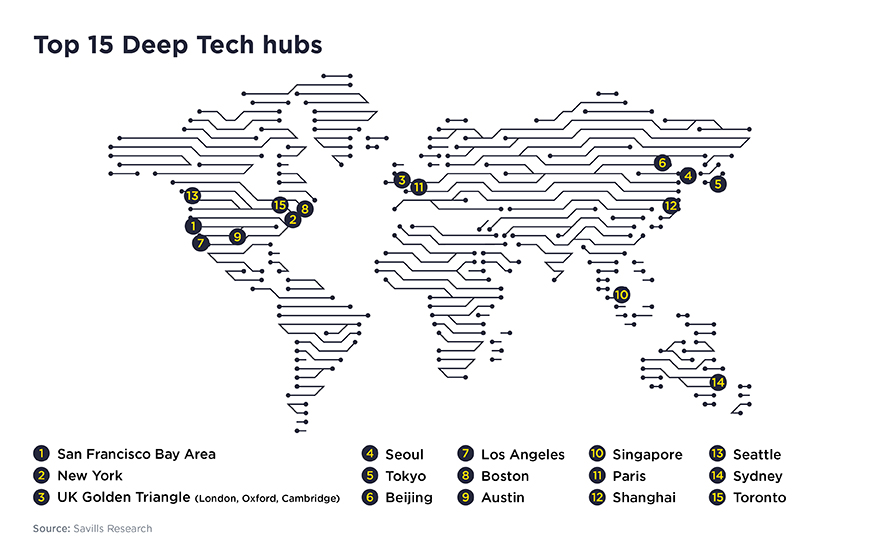
The cities leading the way in AI – and other advanced, research-intensive innovations such as quantum computing, nanotechnology and biotech – are enjoying a significant economic boost. Our Savills Deep Tech Index analyses the top 15 cities where real estate markets are already benefiting from this growth.
Part of our broader Tech Cities research programme, our research shows that the economies of these Deep Tech cities have grown 0.9 percentage points a year faster than the countries they are located in over the past decade. We expect this trend to continue.
As a result, locations such as San Francisco, New York, the UK’s ‘Golden Triangle’ (London, Oxford and Cambridge), Seoul and Tokyo have seen strong demand for office and laboratory space, as well as increased residential needs from highly skilled workers. In addition, the growing integration of AI into life sciences is expected to boost demand for dry labs for computational work.
The San Francisco Bay Area tops the index. It is home to major AI companies and associated businesses, including OpenAI, Anthropic, Google DeepMind and Nvidia. Leasing activity from AI firms has helped San Francisco’s office markets stage a partial recovery, with availability falling from record highs.
The UK’s Golden Triangle is third in our index. A key global biotech and life sciences hub, it is home to 11 top ranked universities (QS Global 500), including leading research institutions. “Strong corporate and venture capital investment in AI is lifting office demand across key knowledge clusters,” says Tom Mellows, Head of UK Science, Savills. “London has become Europe’s leading Deep Tech hub. The Knowledge Quarter (spanning King’s Cross, Bloomsbury and Euston) is at the forefront, benefiting from clustering with tech firms, proximity to leading institutions such as UCL and the Alan Turing Institute, and an amenity-rich urban setting coupled with strong transport links.
“Demand spans both pure-play AI developers such as OpenAI and Anthropic – which have recently announced new or expanded offices – and a growing cohort of science and tech-related businesses that are utilising AI across areas such as robotics, autonomous vehicles, computing, materials and pharma. The latter in particular are redefining building specifications, driving demand for higher power capacity, on-site data infrastructure, enhanced ventilation and, in some cases, clean room facilities.”
Deep Tech cities typically benefit from factors including:
- A pipeline of highly skilled tech and science graduates
- Proximity to leading universities, research institutions and testing facilities
- Access to mature and sophisticated venture capital markets
- Robust intellectual property regulation
Increasingly, AI adoption means access to power supplies is also becoming advantageous.
Will Hawking
Head of Life Sciences, Royal London Asset Management
“AI is fundamentally reshaping how science and research organisations operate. That shift is playing out clearly across London’s Knowledge Quarter. While UK life sciences real estate is often discussed through a narrow wet-lab lens, we are seeing growing requirements for flexible space as traditional research embraces AI and computational data models. Demand is not declining, but evolving.
Our recent lettings to AI-led occupiers at One Triton Square, including Anthropic, illustrate how science-driven and technology-led businesses are converging. These organisations may not require traditional lab space, but they are deeply research-intensive and value proximity to leading institutions, access to talent and collaboration within established innovation ecosystems. Locations like the Knowledge Quarter offer a unique combination of academic excellence, global and regional connectivity, and an amenity-rich urban environment.
Across our wider portfolio, from more established wet-lab environments such as Cambridge Research Park to highly flexible innovation buildings in central London, we see an expanding spectrum of occupier needs. The success of One Triton Square shows why London’s leading knowledge clusters continue to attract global AI and Deep Tech demand.”